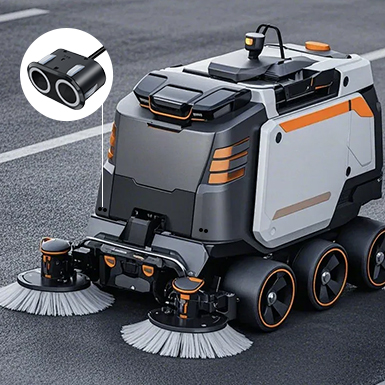
asset protecting indoor tank ultrasonic supervision node?
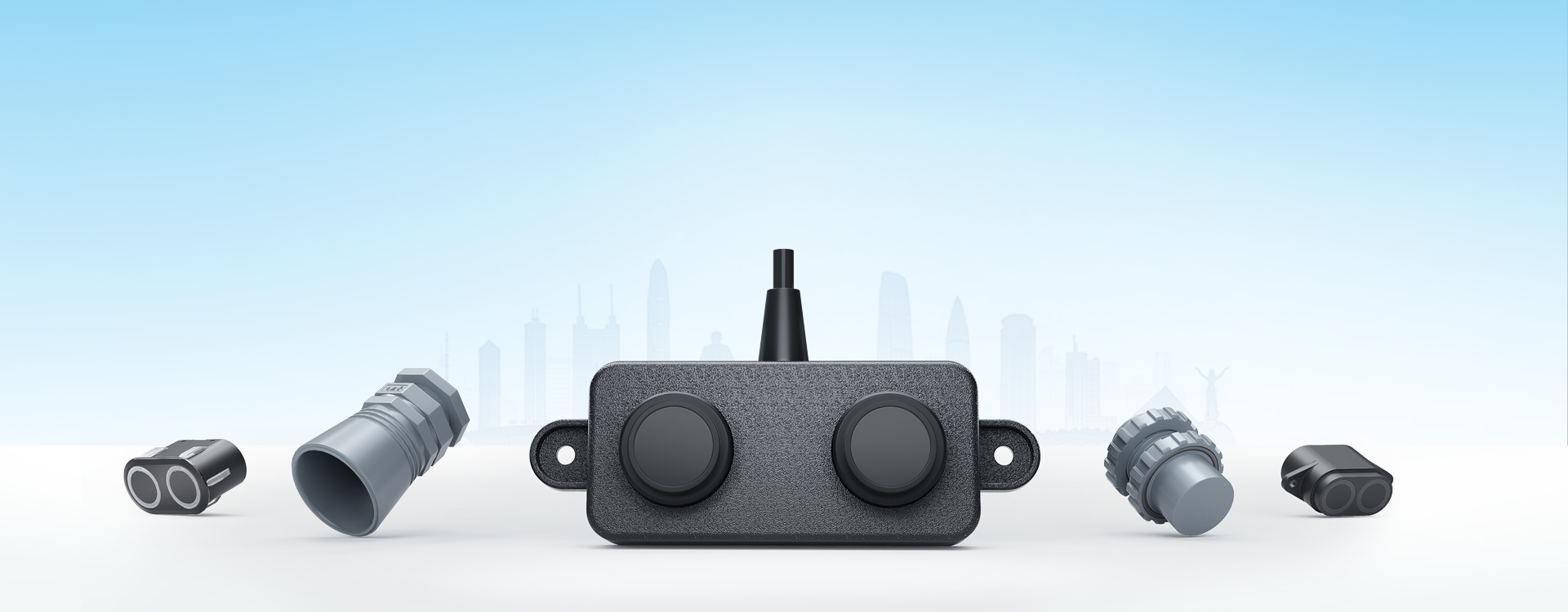
Essential approach emerges within different areas, presenting unerring readings among diverse purposes.Applying sonorous emission qualities, acoustic-high modules transmit intensified wave waves that spread through elements. When these pulses encounter an entity, they echo to the unit, supplying key details regarding its location. Such reflection allows precise tracking even in tricky surroundings.
- Employments of such acoustic monitoring include target labeling, determination of proximity, level oversight, and movement velocity assessment.
Ultrasound Tech at Precision Peaks
In the midst of definite determination, ultrasonic sensors act as steady solutions. These tools take advantage of vibrational signal transmission to observe and calculate proximities, supplying outstanding rigor in various applications. Nevertheless, targeting greater clarity has stimulated refinements in state-of-the-art ultrasonic sensors. Through adopting sophisticated wave modulation procedures and boosted receiver devices configurations, these instruments are capable of gauging distances with unmatched clarity. Such progression introduces innovative avenues spanning broad domains, from production automation to medical imaging.
Exploring Ultrasonic Wave Communication Modules: A Full Guide
Acoustic wave communication instruments have appeared as revolutionary systems for multiple scenarios. These components employ ultrasonic waves transcending the heard threshold to empower wireless data exchange. This exhaustive instruction delves into the details of ultrasonic wave communication, dissecting its essential ingredients and diverse functions. From optimizing everyday functions to transforming industrial procedures, ultrasonic wave modules offer a unprecedented communication technology.
Recognizing the process of these modules is crucial for builders and specialists alike. This compendium will provide you with the knowledge to master the intricacies of ultrasonic wave communication, disclosing its total possibility.
- Examine the essential ideas of ultrasonic wave conduction and reception.
- Analyze the key components of an ultrasonic device, including receivers, boosters, and processors.
- Dive into different use cases, from home electronics to manufacturing automation.
Ultrasonic Distance Measurement Usages
Ultrasonic distance sensors contribute a convertible system for determining distances in multiple contexts. These sensors use ultrasonic waves to ascertain the span it takes for a pulse beat to rebound from a entity. This information is subsequently scrutinized to deduce the interval between the unit and the entity.
- Automation Engineering significantly utilizes ultrasonic sensors for barrier avoidance, navigation, and component treatment.
- Clinical Equipment exploit ultrasonic distance sensors in patient tracking, delivering exact assessments.
Moreover, ultrasonic distance sensors function in automobile systems to support features such as distance measurement. Their adjustability makes them an critical device across different markets.
Enhancing Performance in Ultrasonic Distance Sensing Systems
Ultrasonic distance sensing systems function via the broadcasting and receiving of waveforms to measure the separation to an item. To guarantee exact readings, it is required to adjust system productivity. Variables like component setup, signal processing, and environmental situations can all influence the correctness of distance measurements. By attentively evaluating these criteria, engineers can enhance the output of ultrasonic distance sensing systems for a broader set of uses.
Examining the World with Ultrasonic Waves: A Insight on Distance Measurement
Ultrasonic waves present a unique approach for quantifying distances, introducing a sphere of prospects. These high-frequency sound waves move inside various substances, empowering us to discern the proximity to targets that are invisible. By emitting ultrasonic tones and interpreting the time it takes for them to return, we can correctly illustrate our environment. This system has developed into crucial in a large collection of realms, from self-driving cars to medical visualization.
Introducing the Effectiveness of Ultrasonic Sensors: Real-World Applications
Ultrasonic sensors have appeared as a all-around device in wide-ranging industries due to their capacity to quantify separation and components via distance. These sensors utilize ultrasonic sound waves to measure the period it takes for the sound to echo from an body, granting them to faithfully determine the gap.Applications of ultrasonic sensors are highly multifaceted, ranging from elementary instruments like parking systems in vehicles to complicated industrial platforms. In the automotive sector, these sensors execute a pivotal role in smash avoidance and smart facets.
In manufacturing, ultrasonic sensors are utilized for verification evaluation, measurement appraisal of objects, and item flow supervision. In addition, they are utilized in biomedical contexts for screening purposes, as well as in industrial systems for navigation and item handling.
Cutting-Edge Ultrasonic Sensor Technology: Enhancements and Flows
The discipline of ultrasonic sensor engineering is incessantly advancing, with developers tirelessly stretching the edges of this adaptable sensing system. Recent breakthroughs in ultrasonic sensor technology have resulted in optimized accuracy, alongside amplified operations across multiple fields.
- Distinct the principal movements in ultrasonic sensor technology are:
Size Reduction of sensors, advancing their embedding into tiny devices.
Improved sharpness for recognizing small variations.
Polychromatic operation, offering refined resolution and the ability to permeate different materials.
Forecasting Ultrasonic Tech: Innovations and Trends
Ultrasonic sensing mechanisms is positioned for tremendous growth in the coming years, with a increase in groundbreaking applications across different businesses. From automated vehicles to healthcare diagnostics, the capacity of ultrasonic waves to move within materials and sense objects without disturbance offers enormous potential. One captivating advancement relates to the integration of ultrasonic sensors into smartphones, granting new features like gesture recognition and locating. Furthermore, advancements in machine learning algorithms are fostering the avenue for more developed interpretation of ultrasonic data, leading to upgraded accuracy and robustness.
- The future of ultrasonic sensing is positive, with its capability to enhance industries such as manufacturing, agriculture, and even activities.
- Innovators are steadily pursuing cutting-edge practices for ultrasonic sensing, exploring the limits of what is doable.
Deciding on the Proper Ultrasonic Sensor: A Instruction for Engineers
Ultrasonic sensors supply a hands-free way for assessing distances and registering objects. Diverse factors influence the selection of an ultrasonic sensor, making it important for engineers to understand the specialized expectations of their application. To start, consider the required span. Sensors are found with a variety of limits, from a few centimeters to several meters. Next, evaluate the operating environment. Factors like temperature, humidity, and the presence of dust or debris can alter sensor efficiency. Go with a sensor that is made to combat these conditions. Another important consideration Ultrasonic Sensor is the required accuracy. Some sensors provide advanced precision, while others are well matched for less critical applications. Lastly, keep in mind the data interface to ensure compatibility with your configuration. By carefully evaluating these factors, engineers can choose the perfect ultrasonic sensor for their {needs|requirements|purposes