cost-effective production strategies high-precision drone part crafting?
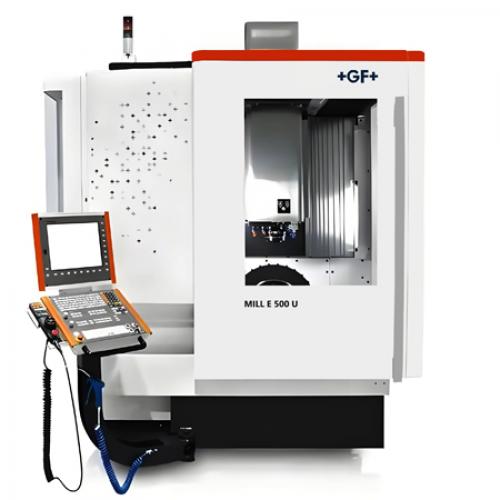
Amidst the exacting domain of drone assembly where burden and effectiveness dictate, precise computerized machining acts as a fundamental step. Automated milling devices expertly craft detailed fragments handling varied substances including malleable metals, robust alloys, and reinforced fibers. The pieces, covering thin chassis and turning blades to detailed control enclosures, necessitate outstanding fidelity and reproducibility.
Advantages of accurate numerical control machining abound in UAV crafting. It facilitates production of feather-light components reducing total craft mass, improving aerial efficiency. Further, exacting dimension governance ensures coherent connection of components, fostering elevated lift and steadiness. Thanks to its capacity for delicate configurations and rigid allowances, CNC empowers designers to stretch inventive limits of UAVs, fostering next-gen robotic aircraft invention.
Accelerated Drafting with CNC for Robotic Uses
In the dynamic realm of robotics, where innovation thrives and precision reigns supreme, rapid prototyping has emerged as an indispensable tool. Program-driven surgical cutting tools, equipped for detailed construction from various materials, empower robot inventors to swiftly materialize hypothetical structures into functional samples. The built-in adaptability of CNC lets experts repeatedly revise and polish models quickly, integrating essential inputs over the creation process.
- Ranging from thin metallic compounds for quick-responding machines to fortified elements for tough assignments, CNC supports broad material choices
- State-of-the-art drafting software smoothly connects with automated cutters, permitting fabrication of intricately exact replicas
- Such continuous design technique substantially lowers build schedules and investment, helping machine developers deliver inventive automated applications promptly
Automated Robot Parts Production: The Power of CNC
The creation branch encounters a remarkable adjustment spurred by applying advanced instruments. In this group, program-driven numerical control machinery features strongly in manufacturing detailed automated parts with exceptional swiftness and correctness. Numerical control equipment utilizes CAD files to execute detailed engraving schemes over multiple substrates, ranging from alloys to polymers. Such robotic operation dispenses with physical interference, advancing manufacturing throughput and balanced quality.
With CNC machining, manufacturers can fabricate complex robot parts with intricate geometries and tight tolerances. The fidelity featured in numeric control tools supports construction of pieces fulfilling challenging specs of up-to-date robotic tasks. The expertise entails an expansive array of device components, embracing grippers, detectors, frames, and instrumentation panels.
- In addition, cybernetic machining supplies critical perks tied to cost savings
- Leveraging algorithmic operations, engineers lessen employee outlays, scrap generation, and cycle times
- The flexibility of CNC machines also allows for rapid prototyping and customization, enabling manufacturers to respond quickly to evolving market demands
Superior Programmed Tooling for Robot Part Construction
Accurate tooling plays a vital role inside the sphere of high-grade robotic aircraft building. Automated tooling, with its unparalleled capability to produce detailed elements from varied media, functions essentially. Automation know-how permits builders to precisely fabricate aircraft modules complying with strict criteria of advanced flight gear. Spanning slim but resilient skeletons to detailed detector cases and powerful motor units, numeric control production aids UAV designers in advancing aeronautical innovation.
- Software-driven carving’s pliability encourages assembly of varied unmanned vehicle pieces
- Utilizing advanced CAM software, designers can create highly complex geometries with ease
- Computerized milling provides superb uniformity, producing trustworthy unmanned craft components
Flexible Mechanical Arm Parts: CNC Systems
Algorithmic fabrication delivers adjustable means to assemble exact engineering arm elements. Exploiting computer-guided machines, engineers manufacture exclusive sections serving specific operational parameters. This level of customization enables the development of robotic arms with optimized performance, precision, and control. Moreover, CNC machining ensures high-quality, durable components that can withstand rigorous operational conditions.The power of computer-operated tools to craft sophisticated shapes and minute characteristics designates them suitable for developing robotic limb elements including:
- Power Units
- Arms
- Pincers
Precision Milling : Sophisticated Processing for Drones
{Unmanned Aerial Vehicles (UAVs), commonly known as drones, are increasingly utilized in a wide range of applications, from aerial photography to package delivery|Robotic aerial units, often referred to as drones, find expanding roles across diverse uses including sky imaging and parcel transportation|Autonomous flying machines, typically called UAVs, serve broad functions such as airborne filming and cargo conveyance|Self-directed aerial devices, also known as drones, see growing deployment in varied activities encompassing drone videography and shipment tasks|Remote-controlled flying vehicles, widely known as UAVs, participate in multifaceted purposes ranging from scenic capturing to load delivery|Pilotless air platforms, colloquially regarded as drones, apply to multiple fields from air recording to freight distribution|Unmanned flying platforms, frequently named UAVs, operate across numerous sectors involving aerial scanning and package logistics|Intelligent flight gadgets, commonly recognized as drones, fulfill expanding demands covering airborne cinematography and transport
The performance of these airborne platforms heavily rely on the precision and accuracy of their components. In this context, program-driven tooling occupies a central position. Numerical control cutting presents unparalleled governance of substrate shaping, facilitating design of elaborate components with narrow limits. That precise matter supports critical tasks inside multiple robotic systems, including framing airframes, rotating blades, and processor casings
The benefits of CNC machining extend beyond just precision. It supplies excellent uniformity, enabling bulk fabrication of matching units with limited difference. This matters for flying robot constructors requiring vast quantities of fragments to answer swelling market interests. Besides, automated shaping processes manage multiple substances including metallic blends, plastics, and fiber-reinforced materials, delivering fabricators options in electing fitting resources for different demands.
Due to relentless UAV development, appetites for enhanced and low-mass components remain surging. Cybernetic tooling maintains its importance advancing detailed manufacturing in aerial automation industry, pushing creativity and widening drone capabilities
Shifting Ideas to Components: CNC Processes in Automation
Throughout the adaptable realm of robotic devices, the passage to physical realizations from theoretical designs stands essential. Automated tooling stands as a necessary technique amid this evolution, backing creators in assembling elaborate robotic pieces with fine precision. Harnessing software-generated schematic plans for reference, numerical control tools sculpt sophisticated forms across mixed resources such as light alloys, steels and plastic composites. This adaptability renders CNC suitable to quickly produce various machine solutions, spanning factory robotics to portable units.
- The preciseness and constancy of algorithm-based manufacturing empower construction of fine automated units adhering to high-quality standards
- CNC machining can be used to fabricate a wide variety of parts, including gears, actuators, chassis, and sensors
- Drafts constructed through program-driven cutting supply essential information for analyzing and enhancing robot blueprints
What’s more, the repetitive cycle of digital machining encourages fast replica assembly, empowering builders to promptly adjust and refine blueprints according to feedback
Promoting Intelligent Robotics through Progressive CNC Strategies
The convergence of robotics and advanced Computer Numerical Control (CNC) techniques is propelling a revolution in manufacturing, automation, and research. Numerically controlled devices, celebrated for precision, permit fabricating intricate machine parts with great fidelity and dependability. This collaboration liberates enhanced capabilities in robotic fields, spanning creation of refined, potent systems to crafting of detailed components for dedicated functions
- Besides, sophisticated automated milling strategies promote volume manufacturing of bespoke robot modules, curtailing outlays and refining development cycles
- Hence, combination of mechanical automata and software-guided tooling fosters emergence of high-tech robots performing elaborate jobs with exceptional sharpness and output
{Ultimately, the continued advancement in both robotics prototyping and CNC technology promises to transform numerous industries, enhancing productivity, safety, and innovation|In conclusion, ongoing progress within automation and program-controlled fabrication vows to revolutionize several sectors, boosting efficiency, protection, and creativity|Finally, persistent evolution in machine control and automated machining guarantees to reshape multiple fields, improving output, security, and inventiveness|