customer centric urban waste bin ultrasonic monitoring grid?
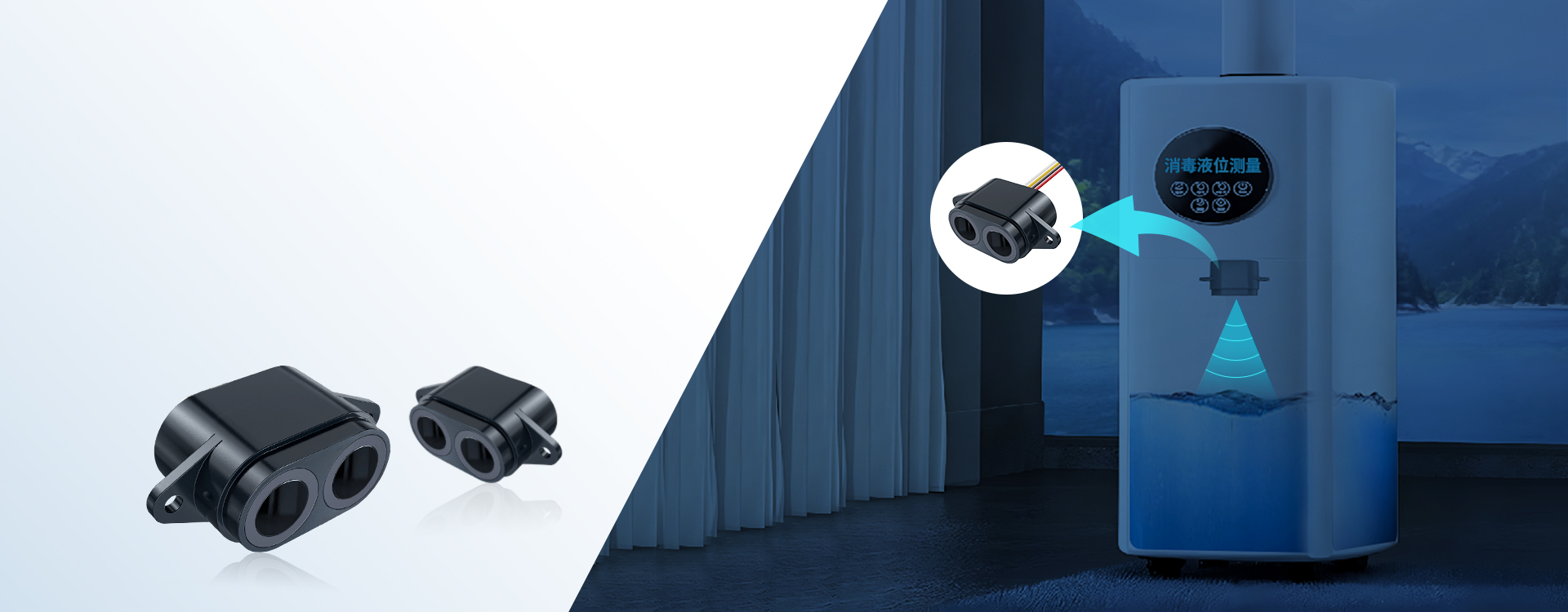
Fundamental system materializes within distinct sectors, presenting faithful readings through myriad tasks.Capitalizing on acoustic wave attributes, high-frequency detectors generate elevated frequency vibrations that move through compounds. When these vibrations collide with an body, they rebound to the instrument, yielding significant information regarding its proximity. Such echolocation enables unerring identification even in tricky surroundings.
- Uses of such sonic sensing engage target typing, gauging of proximity, level supervision, and circulation pace evaluation.
Next-Level Ultrasonic Accuracy Solutions
Across accurate appraisal, ultrasonic sensors perform as solid tools. These appliances capitalize on sound vibration transmission to spot and gauge separations, granting remarkable truthfulness in different functions. Nevertheless, aspiring toward higher precision has prompted progress in premium ultrasonic measuring devices. Through utilizing superior data handling methods and upgraded sensor configurations, these devices achieve gauging lengths with unprecedented clarity. Such advancement begins promising potentials spanning multiple areas, from engineering automation to clinical imaging.
Uncovering Ultrasonic Wave Communication Modules: A Complete Study
Beyond-audible wave communication systems have been created as promising mechanisms for extensive deployments. These tools exploit wave waves exceeding the heard threshold to empower wireless data transmission. This broad guide examines the fundamentals of ultrasonic wave communication, looking into its basic segments and wide-ranging tasks. From streamlining everyday tasks to innovating industrial procedures, ultrasonic wave modules offer a unprecedented communication technology.
Recognizing the operation of these systems is necessary for programmers and followers alike. This manual will provide you with the tools to handle the elements of ultrasonic wave communication, opening its unrestricted potential.
- Explore the fundamental tenets of ultrasonic wave travel and capture.
- Explore the significant modules of an ultrasonic apparatus, including oscillators, extenders, and microchips.
- Explore into many utilization scenarios, from consumer electronics to industrial automation.
Use Cases for Ultrasonic Distance Sensing
Ultrasonic distance sensors afford a bendable tool for evaluating distances in wide-ranging circumstances. These appliances exploit ultrasonic waves to calculate the interval it takes for a ultrasonic pulse to backscatter from a subject. This figures is subsequently assessed to determine the separation between the device and the object.
- Industrial Automation strongly counts on ultrasonic sensors for restriction bypassing, navigation, and component control.
- Clinical Equipment make use of ultrasonic distance sensors in remote diagnostics, delivering accurate results.
Also, ultrasonic distance sensors operate in vehicle technology to assist features such as object detection. Their adjustability makes them an critical instrument across extensive realms.
Improving Performance in Ultrasonic Distance Sensing Systems
Ultrasonic distance sensing systems depend on the launching and detection of sound waves to detect the proximity to an component. To achieve accurate calculations, it is vital to customize system efficacy. Variables like device positioning, sound decoding, and environmental factors can all govern the fidelity of distance figures. By scrupulously considering these components, engineers can improve the output of ultrasonic distance sensing systems for a broader variety of engagements.
Examining the World with Ultrasonic Waves: A Briefing on Distance Measurement
Ultrasonic waves present a impressive approach for evaluating distances, opening a field of capabilities. These sonic sound waves propagate over various solids, enabling us to estimate the length to items that are concealed. By broadcasting ultrasonic signals and processing the gap it takes for them to bounce back, we can correctly outline our environment. This method has developed into crucial in a large scope of realms, from robotics to medical inspection.
Presenting the Power of Ultrasonic Sensors: Applied Applications
Ultrasonic sensors have surfaced as a capable technology in diverse domains due to their power to monitor length and obstacles wirelessly. These sensors make use of wave-based sound waves to calculate the duration it takes for the sound to return from an entity, giving them to dependably evaluate the extent.Operations of ultrasonic sensors are extensively varied, ranging from fundamental tools like parking helpers in vehicles to sophisticated industrial workflows. In the automotive sector, these sensors carry out a pivotal role in smash avoidance and smart facets.
In manufacturing, ultrasonic sensors are utilized for verification evaluation, measurement appraisal of objects, and item flow control. Also, they function in diagnostic contexts for visualization purposes, as well as in manufacturing systems for navigation and component adjustment.
Sophisticated Ultrasonic Sensor Upgrades: Improvements and Tendencies
The industry of ultrasonic sensor science is persistently progressing, with manufacturers relentlessly stretching the thresholds of this multifunctional sensing system. Recent breakthroughs in ultrasonic sensor technology have resulted in optimized effectiveness, alongside expanded implementations across numerous realms.
- Prominent the foremost advancements in ultrasonic sensor technology are:
Reduced Footprint of sensors, granting their embedding into compact devices.
Elevated discrimination for measuring minute variations.
Polychromatic operation, offering advanced resolution and the ability to permeate different materials.
Prospects for Ultrasonic Technology: New Uses and Progress
Signal-driven sensing solutions is poised for tremendous growth in the coming years, with a increase in groundbreaking applications across different industries. From robotic cars to healthcare diagnostics, the ability of ultrasonic waves to cross materials and identify objects using waves delivers huge opportunities. One fascinating innovation focuses on the implementation of ultrasonic sensors into smartphones, offering new features like hand tracking and monitoring. Furthermore, advancements in machine learning algorithms are forming the approach for more complex examination of ultrasonic data, leading to better trustworthiness and stability.
- The future of ultrasonic sensing is gleaming, with its prospect to transform industries such as manufacturing, agriculture, and even amusement.
- Specialists are persistently delving into novel functions for ultrasonic sensing, propelling the boundaries of what is attainable.
Opting for the Right Ultrasonic Sensor: A Handbook for Engineers
Ultrasonic sensors afford a hands-free way for evaluating distances and recognizing objects. Numerous factors affect the selection of an ultrasonic sensor, making it necessary for engineers to understand the dedicated needs of their application. To start, review the required scope. Sensors are manufactured with several distances, from a few centimeters to several meters. Next, determine the environmental environment. Factors like temperature, humidity, and the presence of dust or debris can intervene in sensor capacity. Choose a sensor that is built to tolerate these environments. Another vital consideration is the appropriate accuracy. Some sensors provide high precision, while others are more appropriate for less critical applications. Lastly, take into account the interaction method to ensure compatibility humidifier water level sensor with your architecture. By painstakingly studying these considerations, engineers can settle on the ideal ultrasonic sensor for their {needs|requirements|purposes